
Is Chatki Scam or Legit in Ethiopia? Payment Audit
Executive finding: the money trail comes first
The clearest current fact is not a successful deposit or withdrawal. It is the regulatory position in Ethiopia. The available primary evidence records a nationwide revocation of sports-betting organisation licences effective 15 December 2025. A later report records an ELS warning that no sports-betting operator was currently licensed and gives 9695 as a reporting hotline. On that evidence, the status signal for an Ethiopian bettor is red.
This is an official adverse signal about the market’s current licensing position. It is not proof that Chatki committed fraud, that every payment would fail, or that a particular customer has lost money. It does mean that a payment made after the revocation cannot be treated as a payment to a currently licensed Ethiopian sports-betting operator without newer, precise primary evidence.

| Question | Evidence-led answer | Confidence limit |
|---|---|---|
| Is there a current Ethiopian sports-betting licence? | No current Ethiopian sports-betting licence is supported by the supplied packet; nationwide revocation took effect on 15 December 2025. | This is a national regulatory finding, not a brand-specific misconduct finding. |
| Is the service safe for a new deposit? | The red signal means a new deposit should not be treated as protected by current local licensing. | Payment outcome and solvency were not tested. |
| Has Chatki been proven a scam? | No. The packet does not establish brand-specific fraud or wrongdoing. | Lack of proof is not a safety finding. |
| Can a withdrawal be verified? | No withdrawal test or customer-balance record was supplied. | Do not infer successful or failed withdrawals. |
Exact host and brand identity
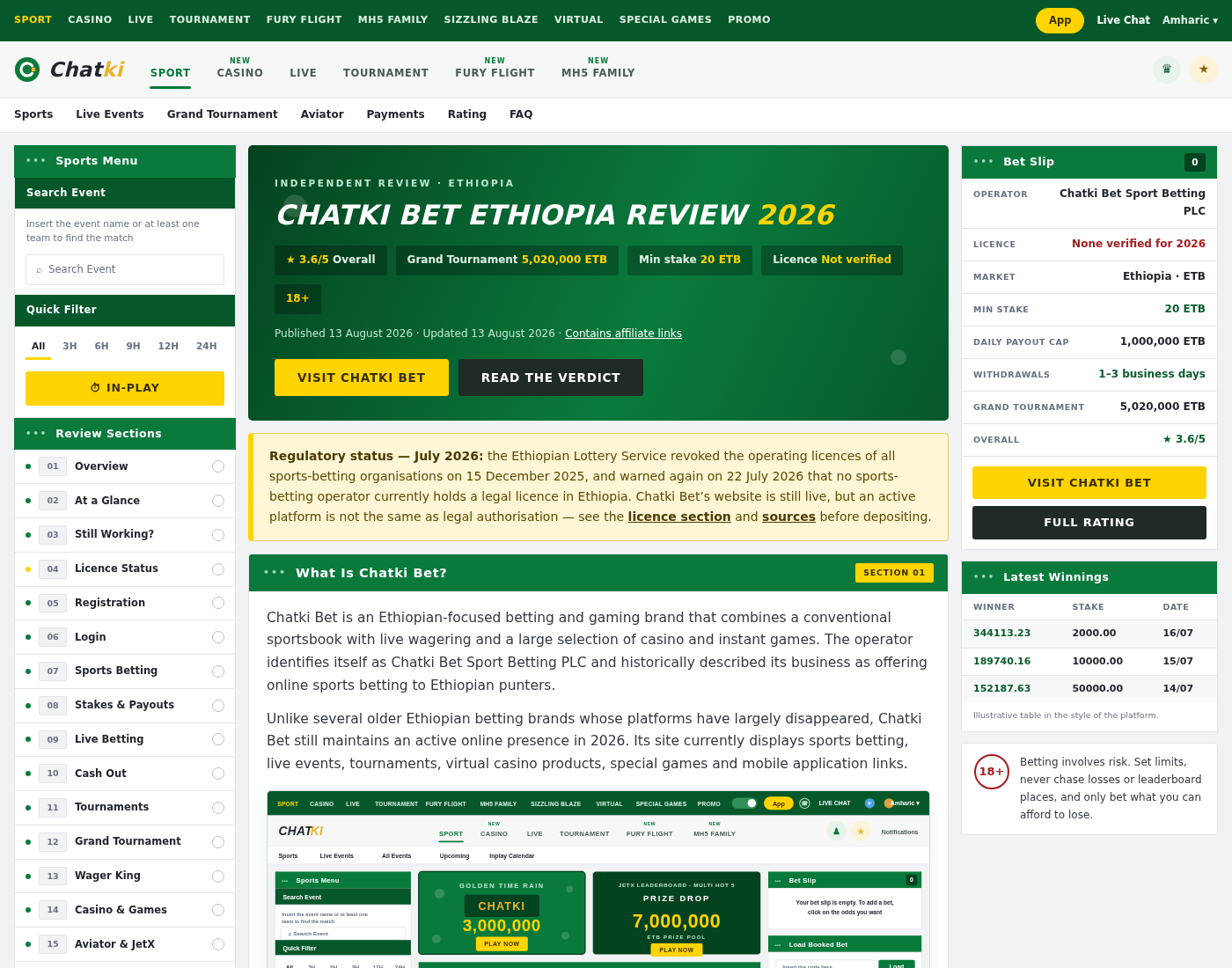
The supplied packet identifies the exact domain under review as chatki.et. It also records Chatki Bet Sport Betting PLC as a reported operator, but expressly says that this legal-entity attribution was not primary-verified. That distinction matters: a brand name, a web address and a legal entity are three separate identity checks.
The supplied independent-context capture uses chatkibet.et, not chatki.et. It shows that the brand appears in public user, review, forum, business-directory or search context, but it does not prove ownership, licensing, safety or wrongdoing. The two hostnames must therefore not be treated as interchangeable. A similar spelling or a different top-level domain can represent a mirror, redirect, clone or unrelated service.
| Identity item | Recorded value | What remains unknown |
|---|---|---|
| Review host | chatki.et | Whether every page or redirect uses this host. |
| Public context host | chatkibet.et | Whether it is owned, operated or merely mentioned by the reviewed service. |
| Reported operator | Chatki Bet Sport Betting PLC | Whether the entity is the contracting party and whether the name is officially registered for this service. |
| Brand | Chatki | Whether all applications, mirrors and payment references belong to one operator. |
Before entering credentials, compare the address bar character by character. Check the spelling after the final dot, avoid links received through unsolicited messages and do not assume that a padlock proves licensing. Transport encryption, if present, only concerns the connection; it does not establish who operates the service or whether Ethiopian law permits it.
Licence status and the legal question
The Ethiopian Lottery Service, or ELS, states that it issues licences and regulates private lottery activity under its establishing framework. The evidence packet therefore treats ELS as the relevant primary regulatory source for this question. However, a regulator’s general role is not the same as a current licence for this brand.
The dated chronology is decisive for the current risk assessment:
| Date or period | Record | Practical meaning |
|---|---|---|
| 15 December 2025 | EBC reports the ELS announcement that all sports-betting organisation licences were revoked. | Previously held permissions cannot be assumed to continue after this date. |
| July 2026 | A report records an ELS warning that no sports-betting operator was currently licensed and gives hotline 9695. | The later warning reinforces the adverse current-market position. |
| 28 August 2026 | Evidence packet checked and dated. | This dossier uses the supplied records as of that check date. |
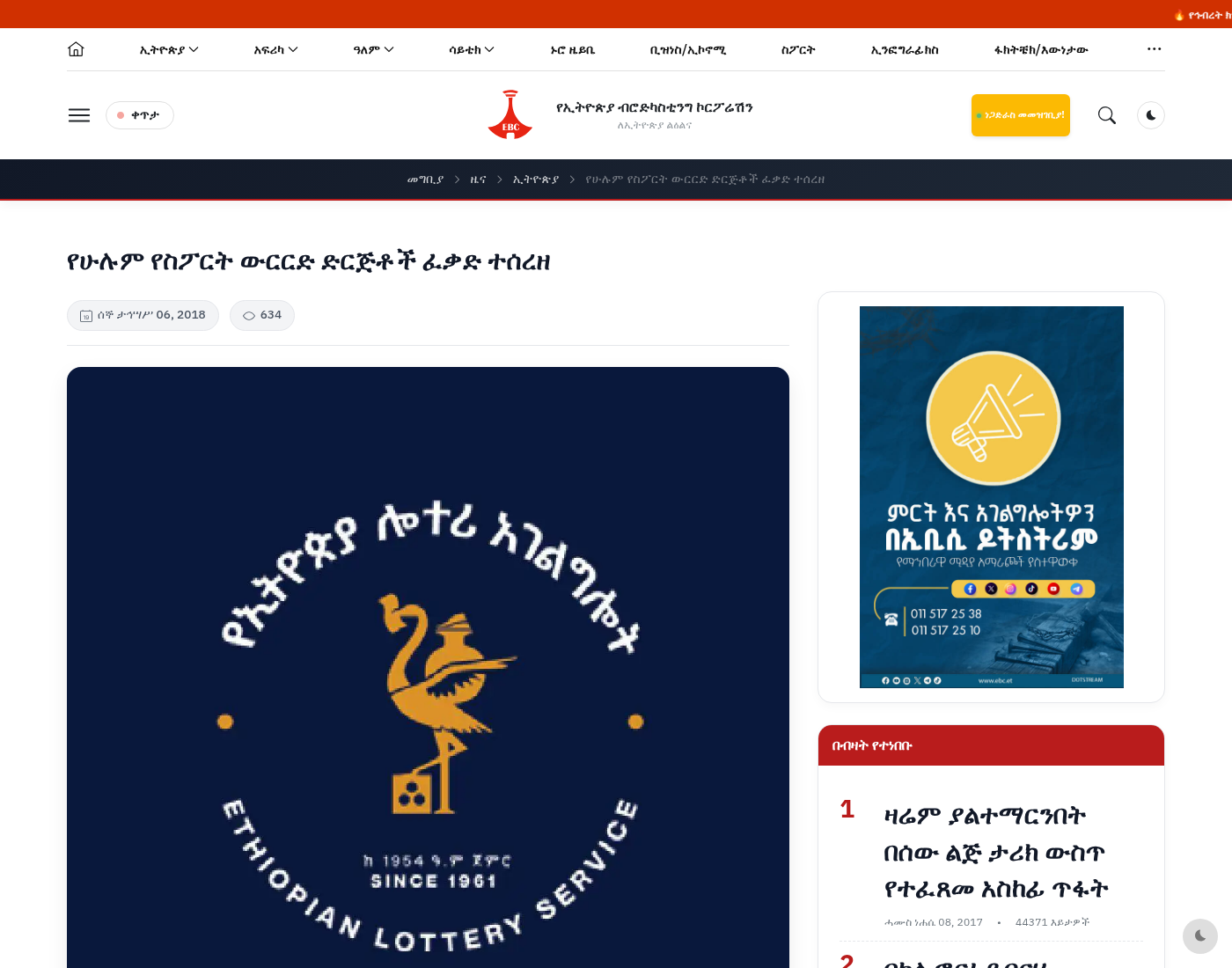
The EBC report is available as a dated report of the nationwide revocation. The ELS website explains the regulator’s licensing and regulatory role at els.gov.et. The later warning and reporting number are recorded in the July 2026 report.
This does not answer every legal question a bettor might have. It does support a narrower conclusion: the supplied evidence does not support treating Chatki as a currently Ethiopian-licensed sports-betting operator. It also does not decide the law of another country, an offshore contract, tax treatment, or the enforceability of a particular account agreement.
Is Chatki scam or legit in Ethiopia?
The most accurate answer is two-part. Legitimacy as a currently locally licensed Ethiopian sports-betting service is not supported and receives a red signal. Brand-specific scam allegations are not established by the supplied evidence. Calling the service a proven scam would go beyond the records.
The red signal comes from official adverse evidence, not from the public-context capture. The context record is deliberately weaker: it only documents the brand’s appearance in public material. User, review and search visibility can help identify names and domains, but it cannot verify a licence, segregated funds, fair settlement or a functioning complaints process.
| Signal | What it means here | What it does not mean |
|---|---|---|
| Red | Official adverse evidence supports a serious current licensing concern. | It does not prove individual fraud or determine a customer’s balance. |
| Amber | Would apply where evidence is incomplete or conflicting without an official adverse record. | It is not the selected signal for this dossier. |
| Green | Would require current primary evidence matching the precise domain and entity. | No such evidence is supplied here. |
For a person deciding whether to deposit, the practical distinction is important. You do not need a proven scam finding to reject a high-risk payment. A missing or adverse licence position can itself be enough reason to pause, preserve funds and seek regulator or bank guidance.
Deposits and bank evidence
No payment method, bank account, mobile-money channel, deposit receipt, withdrawal confirmation or transaction test was supplied. Accordingly, this dossier does not claim that a particular Ethiopian bank, wallet, card, agent or transfer method is accepted by the operator. It also cannot confirm who would receive a payment or whether the payment name matches the reported operator.
A payment audit should preserve the complete trail before action is taken: date and time, amount, currency, transaction reference, sender account, beneficiary name, payment instructions, confirmation screen and related messages. Do not send an additional “verification”, “release”, “tax” or “upgrade” payment merely because a withdrawal is delayed. Such a request may have an explanation, but the evidence packet does not establish one here.
| Payment check | Record to keep | Safe conclusion available? |
|---|---|---|
| Deposit instruction | Hostname, beneficiary, reference and timestamp | No; none was supplied. |
| Account debit | Bank or wallet statement and transaction ID | No; no transaction was tested. |
| Withdrawal request | Amount, request time and status | No; no withdrawal test exists. |
| Fee or tax demand | Message, amount and requested destination | No; no demand is recorded. |
Use the site’s displayed payment information only as a record of what was shown, not as independent proof of ownership. A beneficiary with a different personal or corporate name is a material mismatch that should be documented and queried before further transfers.
Withdrawals, balances and KYC
There is no supplied withdrawal test. We cannot therefore say that withdrawals are fast, slow, blocked or successful. We also cannot verify whether balances are ring-fenced, whether a dormant-account rule applies or whether a customer can recover funds after the national licensing action.
KYC creates a similar identity issue. A request for an identity document does not prove that the requesting service is licensed. Before sending identity material, compare the exact host, read the stated privacy terms, confirm the legal recipient and ask why each document is necessary. Do not provide passwords, one-time codes or remote access to a device. If documents have already been sent, retain the submission record and watch for account misuse.
| KYC question | What this review can verify | What is unknown |
|---|---|---|
| Who requests the documents? | No primary-verified contracting entity is supplied. | Whether the reported operator controls the KYC process. |
| Which documents are required? | None are verified in the evidence packet. | The exact document list and retention period. |
| Is KYC legally protective? | No; identity checks alone do not establish a licence. | How any submitted data would be handled. |
A mismatch between the hostname, payment beneficiary and KYC recipient should be treated as an unresolved risk rather than explained away as normal branding.
Clone and redirect checks
Clone checking is especially important because the supplied context host differs from the exact review host. Type the host manually, save screenshots showing the full address and inspect redirects before login. Compare the final hostname after each redirect, not merely the first link opened.
Do not rely on a copied logo, colour scheme or familiar brand wording. Those elements can be reproduced. Stronger identity evidence would be a current regulator record naming the precise domain and legal entity, but no such matching record is supplied. A domain ending in “.et” also does not, by itself, prove Ethiopian authorisation.
| Check | Pass condition | Result from supplied packet |
|---|---|---|
| Exact hostname | The final address is chatki.et and matches the intended service. | The packet identifies chatki.et but also shows chatkibet.et in context. |
| Entity match | A primary record connects the domain to the contracting operator. | Not verified. |
| Licence match | A current primary record names the precise domain and entity. | Not supplied; national adverse evidence points the other way. |
| Payment match | Beneficiary identity matches the verified operator. | Not tested. |
Complaints and preserving a payment claim
If money or personal data is involved, create a dated evidence folder. Include account identifiers without exposing passwords, deposit and withdrawal references, bank statements with unnecessary data redacted, screenshots of the full address bar, support correspondence and the exact requested remedy. Keep original files where possible and note when each file was captured.
For the regulatory concern, the supplied later warning records 9695 as the ELS reporting hotline. Use the number only in the context of the relevant warning and verify the current instructions through an official channel before sharing sensitive information. A bank or payment provider may also have a dispute or fraud-reporting process; contact it promptly using the number on an official statement or card, not a message supplied by the service.
A complaint should state facts rather than accusations: what was paid, when, to whom, what was promised, what happened and what evidence is attached. The evidence packet does not establish a brand-specific finding, so describe any suspected misconduct as an allegation unless a competent authority confirms it.
What the evidence cannot establish
Several questions remain open. We have no verified legal-entity registration for the service, no current domain-specific Ethiopian licence, no payment-method inventory, no withdrawal result, no KYC policy record, no balance reconciliation, no confirmed customer complaint and no evidence authenticating every mirror or application.
Those gaps are not minor details. They prevent a reliable claim about solvency, customer service, payout performance, data protection or the ownership of a payment destination. The nationwide action supports a current local licensing warning, but it does not establish that every individual interaction was fraudulent or that every customer claim is valid.
The correct response to an unknown is to label it unknown, preserve evidence and seek confirmation from the competent source. It is not to fill the gap with a review score, a screenshot impression or an anecdote.
Methodology and correction path
This dossier separates evidence into three tiers. Primary evidence consists of regulator or regulator-linked records and dated reports describing official action. Operator evidence would be a statement from the service itself, but no operator statement is used to establish licensing here. User-context evidence only shows that a name or host appears in public context; it cannot prove safety, wrongdoing or authorisation.
The signal is red because official adverse evidence supports the precise current market concern: nationwide sports-betting licence revocation effective 15 December 2025, followed by a report of no currently licensed sports-betting operator. The signal is not based on the independent-context capture.
A correction would require dated, primary evidence that directly matches the precise domain, the responsible legal entity and a current Ethiopian authorisation. Send the record, its publication date and the exact host covered by it through the site’s contact or editorial correction route. A correction request cannot retroactively turn an unverified operator statement into primary evidence; it must be checked against the competent record.
Practical decision table
| If you are considering… | Evidence-led action |
|---|---|
| Making a first deposit | Pause until current primary licensing evidence matches the exact host and entity. |
| Making a second payment to release funds | Do not assume the demand is legitimate; preserve it and seek bank or regulator guidance. |
| Completing KYC | Verify the exact host, legal recipient, purpose and privacy terms before sending documents. |
| Recovering an existing balance | Gather transaction records, contact the payment provider promptly and report the regulatory concern through the recorded route. |
| Visiting a similar-looking domain | Treat it as a separate service until ownership and licence matching are proven. |
For background on how we assess licence and identity claims, use the legal checks guide. For a payment-specific overview, see payment guidance. If you decide to follow a commercial route despite the warning, use only the supplied Continue from the file and do not interpret that link as proof of licensing.
FAQ
Is Chatki currently licensed for sports betting in Ethiopia?
The supplied evidence does not support a current Ethiopian sports-betting licence. It records nationwide revocation effective 15 December 2025 and a later warning that no sports-betting operator was currently licensed.
Does the red signal prove that Chatki is a scam?
No. The red signal reflects official adverse evidence about the current Ethiopian licensing position. It does not prove brand-specific fraud, resolve customer balances or establish that every interaction was wrongful.
Is chatki.et the same as chatkibet.et?
That is not established. chatki.et is the exact host under review, while chatkibet.et appears in the supplied public-context record. Similar names and domains must be treated as separate until ownership and legal responsibility are verified.
Can you confirm that Chatki withdrawals work?
No. No withdrawal test, customer-balance record or payment confirmation was supplied. Any claim that withdrawals succeed or fail would go beyond the evidence.
Should I send identity documents for KYC?
First verify the exact host, the legal recipient, the purpose of each document and the applicable privacy information. A KYC request by itself does not prove that the service is licensed or that the recipient is trustworthy.
Where can an Ethiopian bettor report a concern?
The supplied report records 9695 as the ELS reporting hotline in connection with its warning. Preserve payment and account evidence, and verify current reporting instructions through an official channel before sharing sensitive information.
What would change this assessment?
A dated primary record would need to match the precise domain, responsible legal entity and current Ethiopian authorisation. An unsupported brand statement, copied logo or public mention would not be enough.